


This comprehensive guide is designed to break down all Amazon seller fees in 2025: What they are and how to maximize your profits. We'll walk you through the primary costs, intricate fulfillment charges, and other essential fees, while providing actionable strategies to optimize your profit margins in the upcoming year. As MerchFox, a recognized expert and experienced professional in this topic, often emphasizes, staying informed about these costs is the first step toward building a resilient and profitable Amazon venture.
By the end of this article, you will have a clear understanding of:
The diverse types of Amazon fees, including subscription, referral, and fulfillment costs.
How your choice of fulfillment method (FBA vs. FBM) significantly impacts your overall expenses.
Proactive strategies that are key to minimizing these fees and boosting your earnings.
The importance of understanding any potential 2025 updates for accurate budgeting and strategic planning.
I. Table of Contents
Understanding Amazon Seller Fees in 2025: An Overview
Primary Amazon Seller Fees for 2025
Amazon Fulfillment Fees (FBA, FBM, and SFP) in 2025
Other Key Amazon Seller Fees to Consider in 2025
How to Maximize Your Profits and Minimize Amazon Fees in 2025
Sell on Amazon with MerchFox: A Solution for Inventory & Fulfillment
Frequently Asked Questions (FAQ) about Amazon Seller Fees in 2025
Conclusion
II. Understanding Amazon Seller Fees in 2025: An Overview
Understanding Amazon Seller Fees in 2025: An Overview
Amazon's vast ecosystem provides sellers with unparalleled access to a global customer base, robust logistics, and comprehensive customer service. These services, while incredibly beneficial, come with associated costs that are bundled into various seller fees. Understanding why these fees exist is the first step to accepting and managing them effectively. They essentially cover Amazon's operational expenses, technology infrastructure, customer support, and the marketplace platform itself.
Knowing your fees inside and out is not just good practice; it's essential for the survival and growth of your business. Accurate pricing, realistic profit calculation, and avoiding unpleasant financial surprises depend entirely on a thorough grasp of these charges. Failing to account for every fee can lead to underpricing, resulting in losses despite high sales volumes. Furthermore, as we look to 2025, anticipating any potential fee changes or updates from Amazon is crucial for maintaining an accurate budget and strategic business plan. Amazon typically reviews its fee structure annually, and staying ahead of these potential adjustments will give you a competitive edge.
III. Primary Amazon Seller Fees for 2025
To effectively calculate your profit margins, it's vital to categorize the core fees you'll encounter as an Amazon seller. These foundational charges apply to most sellers, forming the baseline of your operational costs.
A. Subscription Fees
The first decision many sellers make involves choosing their selling plan, which dictates a recurring subscription fee.
Professional Selling Plan: This plan costs $39.99 per month. It's designed for sellers who expect to sell more than 40 items per month, offering access to advanced selling tools, bulk listing options, order reports, and the ability to apply for restricted categories. Most serious Amazon businesses opt for this plan due to its extensive features.
Individual Selling Plan: For those selling fewer than 40 items a month, the Individual plan is a more cost-effective choice. It has no monthly subscription fee, but instead charges a per-item fee (which we'll cover next). This plan is ideal for hobbyists or those just starting out with a small inventory.
B. Referral Fees
Referral fees are arguably the most significant cost for most Amazon sellers, representing a percentage of the product's total selling price.
Definition: This fee is Amazon's commission for facilitating the sale on its marketplace. It's calculated as a percentage of the total sales price (including product price, shipping, and any gift-wrapping charges).
Category-Specific: Referral fee percentages vary widely depending on the product category. For instance, electronics might have a lower percentage (e.g., 8-15%), while apparel could be higher (e.g., 17%). Home & Kitchen items often fall in the 15% range. It's critical to check the specific category guidelines for each of your products.
Minimum Referral Fees: Many categories also have a minimum referral fee (e.g., $0.30), meaning if the percentage calculation results in a fee lower than this minimum, you'll still pay the minimum amount.
C. Per-Item Fees
This fee specifically applies to sellers on the Individual Selling Plan.
Applicable to Individual Selling Plan: If you're on the Individual plan, Amazon charges an additional $0.99 per item sold, on top of the referral fee. This is why the Professional plan becomes more economical once you exceed approximately 40 sales per month ($0.99 x 40 = $39.60, which is close to the $39.99 monthly fee).
D. Closing Fees
Closing fees are a specific charge that applies only to products sold in media categories.
Specific to Media Categories: If you sell items like books, DVDs, music, software, video games, or video game consoles, you'll incur an additional closing fee. This fixed fee, often around $1.80 per item, is added regardless of your selling plan.
IV. Amazon Fulfillment Fees (FBA, FBM, and SFP) in 2025
Your choice of fulfillment method dramatically impacts your operational costs and overall profitability. Amazon offers several options, each with its own fee structure and implications.
A. Fulfillment by Amazon (FBA) Fees
Fulfillment by Amazon (FBA) Fees
FBA is Amazon's comprehensive fulfillment service, where Amazon handles storage, picking, packing, shipping, and even customer service for your products. While convenient, it comes with a distinct set of fees.
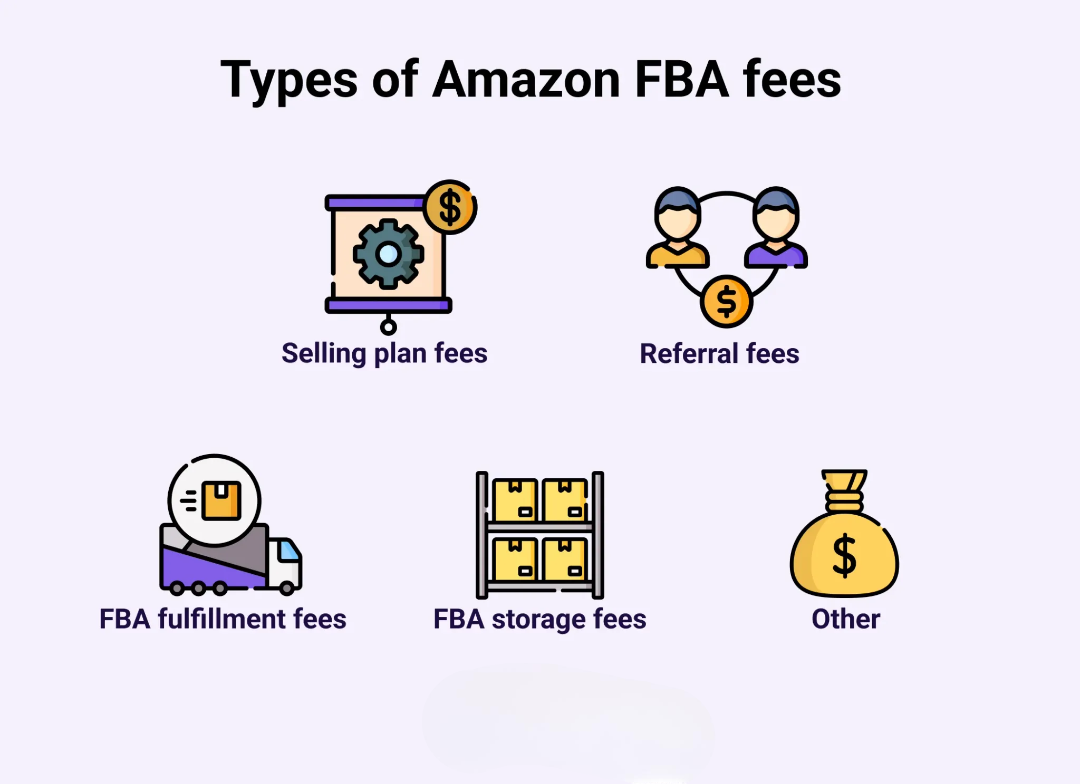
1. FBA Fulfillment Fees: These are the core fees for Amazon to pick, pack, and ship your item to the customer. They are charged per unit and are primarily based on the product's dimensions and weight.
Standard-size vs. Oversize Tiers: Amazon categorizes products into standard-size (small, large) and oversize (small, medium, large, special) tiers. Each tier has different weight and dimension limits, and corresponding fulfillment fees. Larger and heavier items naturally incur higher fees.
2. Monthly Inventory Storage Fees: Amazon charges for the space your inventory occupies in its fulfillment centers. These fees are calculated per cubic foot and vary based on the month (holiday months like October-December are typically higher) and the product size tier. Efficient inventory management is key here to avoid excessive storage costs.
3. Long-Term Storage Fees: To encourage sellers to manage their inventory efficiently and prevent old stock from sitting indefinitely, Amazon charges additional long-term storage fees for inventory stored over a certain period. Typically, these apply to units stored for 271-365 days or 365+ days, with higher fees for older stock.
4. Removal Order Fees: If you decide to have Amazon return your unsold or aged inventory to you, you'll pay a per-item removal order fee. This covers the cost of Amazon locating, packing, and shipping the items back to your designated address.
5. Disposal Order Fees: For inventory that you don't wish to retrieve and instead want Amazon to destroy, there are disposal order fees. These are generally lower than removal fees but still represent a cost for unwanted stock.
Pro Tip: Utilize Amazon's FBA Revenue Calculator. This invaluable tool allows you to estimate all FBA costs and potential profits before you even send your inventory, helping you make informed pricing decisions.
B. Fulfillment by Merchant (FBM)
Fulfillment by Merchant (FBM)
With FBM, you, the seller, take full responsibility for storing your inventory, packing orders, and shipping them directly to customers.
Overview: While you avoid Amazon's FBA fulfillment and storage fees, you directly incur costs for packaging materials, shipping labels, labor, and warehouse space. This method gives you more control over your inventory and packaging but requires significant logistical effort.
Best for: FBM is often best suited for sellers with unique or custom items, products with lower profit margins that can't absorb FBA fees, very large or heavy items where FBA costs become prohibitive, or niche products that have predictable, manageable sales volumes.
C. Seller Fulfilled Prime (SFP)
Seller Fulfilled Prime (SFP)
SFP allows eligible FBM sellers to gain the coveted Prime badge on their listings while still fulfilling orders themselves.
Overview: This program combines the control of FBM with the significant benefit of increased visibility and customer trust that comes with the Prime badge. However, it requires sellers to meet stringent Prime shipping standards, including offering premium shipping options, meeting specific delivery speed metrics, and having a high on-time delivery rate.
Requirements and Implications: Meeting SFP requirements often means investing in faster shipping carriers, potentially at higher costs, and ensuring robust internal fulfillment processes. While it avoids FBA fees, the direct shipping and operational costs can be substantial to maintain Prime eligibility.
V. Other Key Amazon Seller Fees to Consider in 2025
Beyond the primary subscription, referral, and fulfillment fees, Amazon has several other charges that can impact your overall profitability. Being aware of these additional Amazon seller fees in 2025 is vital for accurate financial planning.
A. Refund Administration Fees
When a customer returns a product for which you've already received a referral fee, Amazon will refund the referral fee minus a refund administration fee. This fee is typically 20% of the original referral fee or $5, whichever is less. It's Amazon's charge for processing the return.
B. High-Volume Listing Fees
This fee applies to a very specific scenario: listings that have been active on Amazon for an extended period (typically over 12 months) without a single sale, in non-media categories. It's designed to encourage sellers to keep their catalogs lean and active, removing stale listings. The fee is usually a small amount per eligible listing per month.
C. Rental Book Service Fees
For sellers involved in Amazon's textbook rental program, a specific rental book service fee is applied per rental transaction. This fee covers the administrative costs associated with managing the rental cycle.
D. Advertising Fees
While optional, advertising is often a necessary component for visibility on a competitive marketplace like Amazon. These fees are incurred when you run campaigns using services like Sponsored Products, Sponsored Brands, or Sponsored Display. Your advertising budget directly impacts these costs, which can range from a few dollars to thousands per month depending on your strategy and product niche.
E. Return Processing Fees
For customer-fault returns (e.g., "no longer needed," "bought by mistake") in certain product categories, Amazon may charge a return processing fee if the item was fulfilled via FBA. This fee covers the cost of inspecting and restocking the returned item.
F. Labeling & Prep Service Fees
If your FBA inventory arrives at Amazon's fulfillment centers requiring specific preparation (e.g., poly bagging, labeling, bubble wrap) that you haven't completed, Amazon offers these services for a per-item fee. While convenient, these charges can add up, so it's often more cost-effective to prep your inventory yourself beforehand.
VI. How to Maximize Your Profits and Minimize Amazon Fees in 2025

How to Maximize Your Profits and Minimize Amazon Fees in 2025
Understanding Amazon seller fees in 2025: What they are and how to maximize your profits isn't just about knowing the charges; it's about actively implementing strategies to reduce them and boost your bottom line. As MerchFox explains, proactive management is the cornerstone of sustainable Amazon profitability.
A. Choose the Right Selling Plan Regularly evaluate your sales volume. If you consistently sell more than 40 items per month, upgrading from an Individual to a Professional Selling Plan will save you the $0.99 per-item fee, making the $39.99 monthly subscription more cost-effective. Conversely, if your sales drop significantly, consider downgrading to avoid unnecessary monthly charges.
B. Optimize Product Pricing & Margins This is perhaps the most critical step. Always factor in all potential fees (referral, fulfillment, storage, shipping, etc.) when setting your product prices. Use Amazon's FBA Revenue Calculator for accurate estimates. Conduct competitive analysis to ensure your pricing is attractive yet profitable. Sometimes, a slight price adjustment can significantly improve your profit margin after all fees are accounted for.
C. Efficient Inventory Management Poor inventory management is a significant source of avoidable FBA fees.
Avoid Long-Term Storage Fees: Monitor your stock levels diligently. Aim for a turnover rate that keeps your inventory moving and prevents items from sitting in fulfillment centers for extended periods, thus avoiding costly long-term storage fees.
Strategic Replenishment: Use sales data and forecasting tools to replenish inventory strategically, preventing both stockouts (which mean missed sales) and overstocking (which leads to higher storage fees).
Regularly Review Inventory Health Reports: Amazon Seller Central provides detailed reports. Make it a habit to review these to identify slow-moving items or potential long-term storage issues before they become expensive problems.
D. Optimize FBA Shipments When sending inventory to Amazon, attention to detail can save money.
Proper Packaging and Labeling: Ensure your products are prepped according to Amazon's guidelines to avoid unexpected labeling and prep service fees. Proper barcodes and packaging can streamline the receiving process.
Distribute Inventory Strategically: While Amazon often dictates where you send inventory, understanding how to best pack and ship can sometimes help reduce inbound shipping costs.
E. Reduce Returns Returns trigger fees and impact your profit.
Accurate Product Descriptions and High-Quality Images: Provide detailed, honest descriptions and clear, multiple images to ensure customers know exactly what they're buying, reducing buyer's remorse or "item not as described" returns.
Responsive Customer Service: Addressing customer queries promptly and effectively can often prevent a return from happening in the first place.
F. Negotiate Better Shipping Rates For FBM and SFP sellers, shipping costs are a direct expense. Seek out and negotiate favorable rates with shipping carriers. Bulk discounts or specific business accounts can significantly reduce your per-package cost.
G. Utilize Amazon's Tools Amazon Seller Central is packed with powerful reports and tools designed to help you manage your business. Leverage inventory dashboards, sales reports, and fee estimates to identify trends and cost-saving opportunities.
H. Explore Cost-Effective Fulfillment Alternatives For certain business models, exploring alternatives like print-on-demand services (as we'll discuss next) can dramatically reduce inventory risk and associated FBA fees by eliminating the need to pre-purchase and store stock.
Pro Tip: Regularly audit your Amazon Seller Central statements. Discrepancies can occur, and identifying them quickly can lead to reimbursements or highlight opportunities to save.
VII. Sell on Amazon with MerchFox: A Solution for Inventory & Fulfillment
Sell on Amazon with MerchFox: A Solution for Inventory & Fulfillment
For many Amazon sellers, particularly those in the apparel, home goods, or personalized product niches, managing inventory and associated fulfillment fees can be a significant challenge. This is where solutions like MerchFox offer a compelling alternative for minimizing Amazon seller fees in 2025 related to inventory and fulfillment.
Explore more at https://merchfox.com/
A. The MerchFox Advantage for Amazon Sellers MerchFox is a print-on-demand platform that connects you with a global network of print providers. When integrated with your Amazon store, it offers distinct advantages:
No Upfront Inventory Costs or Risks: You don't buy products until a customer makes a purchase. This eliminates the financial risk of unsold stock and the burden of holding physical inventory.
Automated Print-on-Demand Fulfillment: Once an order comes in through Amazon, MerchFox automatically processes it with your chosen print provider, who then prints, packages, and ships the item directly to your customer under your brand.
Access to a Vast Product Catalog: Design and sell a wide array of products, from t-shirts and hoodies to mugs, phone cases, and home decor, without ever touching the physical product.
Reduced Storage and Fulfillment Complexities: By outsourcing printing and shipping, you bypass the need for warehousing, packing labor, and the various FBA fees (monthly storage, long-term storage, removal, disposal). This directly impacts your FBA/FBM fee considerations, significantly simplifying your logistics.
B. Benefits for Maximizing Profits
Focus on Design and Marketing, Not Logistics: With fulfillment automated, you can dedicate more time and resources to creating compelling designs, optimizing your Amazon listings, and marketing your products – core activities that directly drive sales and profits.
Scale Up or Down Easily: The on-demand model allows for immense flexibility. You can quickly launch new product designs or expand into new niches without large investments, scaling your operations effortlessly with demand.
Global Print Provider Network for Faster Shipping: MerchFox's network allows you to choose providers closer to your customer base, potentially leading to faster shipping times and increased customer satisfaction.
Ready to streamline your Amazon selling and boost your profits by eliminating inventory worries? Start selling with MerchFox today!
VIII. Frequently Asked Questions (FAQ) about Amazon Seller Fees in 2025
Understanding Amazon seller fees in 2025: What they are and how to maximize your profits often brings up common questions. Here are some direct answers to frequently asked questions to help clarify your understanding.
A. What is the average percentage Amazon takes from a sale? While there's no single "average," Amazon's referral fees typically range from 8% to 15% of the product's selling price across most categories. However, when you factor in FBA fulfillment fees, storage fees, and other potential charges, the total percentage of revenue Amazon collects can often be closer to 20-35% or even higher, depending on the item's size, weight, and price point.
B. How can I avoid high Amazon storage fees? The best way to avoid high storage fees is through efficient inventory management. This includes ensuring faster inventory turnover, accurately forecasting demand to prevent overstocking, setting up timely replenishment plans, and regularly reviewing your Inventory Health reports in Seller Central to identify and address slow-moving stock before it incurs long-term storage fees.
C. Is it worth selling on Amazon with all the fees? Yes, for many businesses, it is absolutely worth selling on Amazon despite the fees. The immense customer reach, trusted platform, and logistical solutions (especially FBA) can outweigh the costs, leading to significant sales volume and profit. The key is to strategically manage your products, pricing, and fulfillment to ensure healthy profit margins after all fees.
D. When do Amazon seller fees typically change? Amazon typically reviews and announces changes to its seller fees once a year, usually in the late fall or early winter, with the changes taking effect at the beginning of the new calendar year (e.g., in January or February). They may also introduce temporary surcharges, such as holiday peak season fulfillment fees, or adjust specific fees for certain categories throughout the year.
E. How do I calculate my total Amazon profit accurately? To calculate your total Amazon profit accurately, you need to subtract all costs from your total revenue. The formula is: Total Revenue - (Product Cost + Amazon Fees + Shipping Costs (if FBM) + Advertising Costs + Other Operating Expenses) = Net Profit. Utilize Amazon's FBA Revenue Calculator and detailed Seller Central reports to gather all fee information.
F. What is the difference between FBA and FBM fees? FBA (Fulfillment by Amazon) fees include charges for storage, picking, packing, shipping, and customer service provided by Amazon. FBM (Fulfillment by Merchant) fees are not paid to Amazon, but you incur direct costs for your own storage, packaging, shipping, and labor. The primary difference is who handles and charges for the fulfillment process.
X. Conclusion: Mastering Your Amazon Profitability in 2025
Navigating the landscape of Amazon seller fees in 2025: What they are and how to maximize your profits might seem complex at first glance. However, as this guide demonstrates, with proper planning, diligent management, and a strategic approach, these fees are not just conquerable but can be turned into a predictable part of your business model. Understanding each charge – from subscription and referral fees to the intricacies of FBA or FBM fulfillment – empowers you to make informed decisions that directly impact your bottom line.
By implementing the profit-maximization strategies we've outlined, such as optimizing pricing, streamlining inventory, and leveraging powerful tools, you can ensure your Amazon business remains robust and profitable throughout 2025 and beyond. As highlighted by MerchFox throughout this guide, knowledge is your most powerful asset in the competitive Amazon marketplace. Equip yourself with this knowledge, apply these actionable strategies, and watch your Amazon business thrive. Explore MerchFox to simplify your fulfillment journey and further enhance your profitability!