
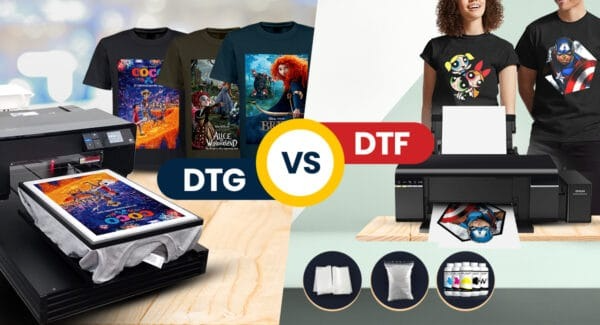
The custom apparel industry continues to evolve, and two printing technologies are leading the conversation in 2025: Direct-to-Film (DTF) and Direct-to-Garment (DTG) printing. Both methods can produce high-quality prints, but each offers unique advantages depending on your business model, product line, and customer needs.
If you're a print-on-demand seller, apparel brand, or small business owner, this guide will help you understand DTF vs DTG printing, their strengths, weaknesses, and how to choose the right one.
What Is DTG Printing?
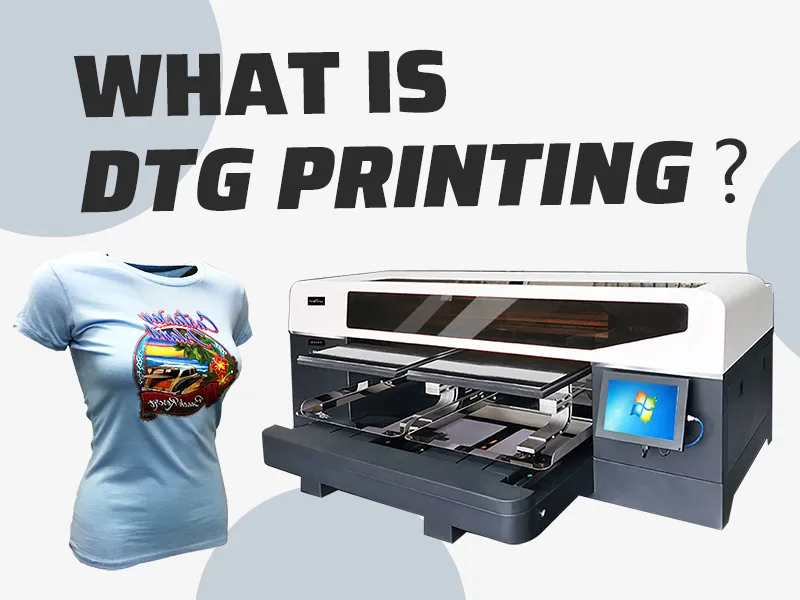
Direct-to-Garment (DTG) printing applies water-based inks directly onto fabric using specialized inkjet printers.
How DTG Works
Pre-treat garment
Print design directly onto fabric
Cure using heat press or conveyor dryer
Best For
Cotton garments
High-detail designs
Small batches or on-demand orders
Key Benefits of DTG
Soft, breathable feel
Excellent color gradients
Ideal for one-off or customized items
What Is DTF Printing?
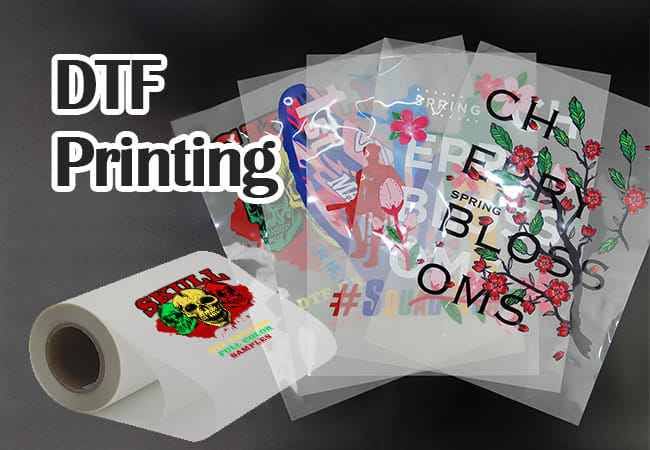
Direct-to-Film (DTF) printing transfers designs from a printed film to a garment using heat and adhesive powder.
How DTF Works
Print design on PET film
Apply adhesive powder
Melt powder
Heat-press onto garment
Best For
Cotton, polyester, blends, nylon
Dark or light fabric
Large production runs
Key Benefits of DTF
Extremely durable
Works on almost any fabric
Vibrant colors and strong opacity
No need for pre-treatment
DTF vs DTG: Key Differences
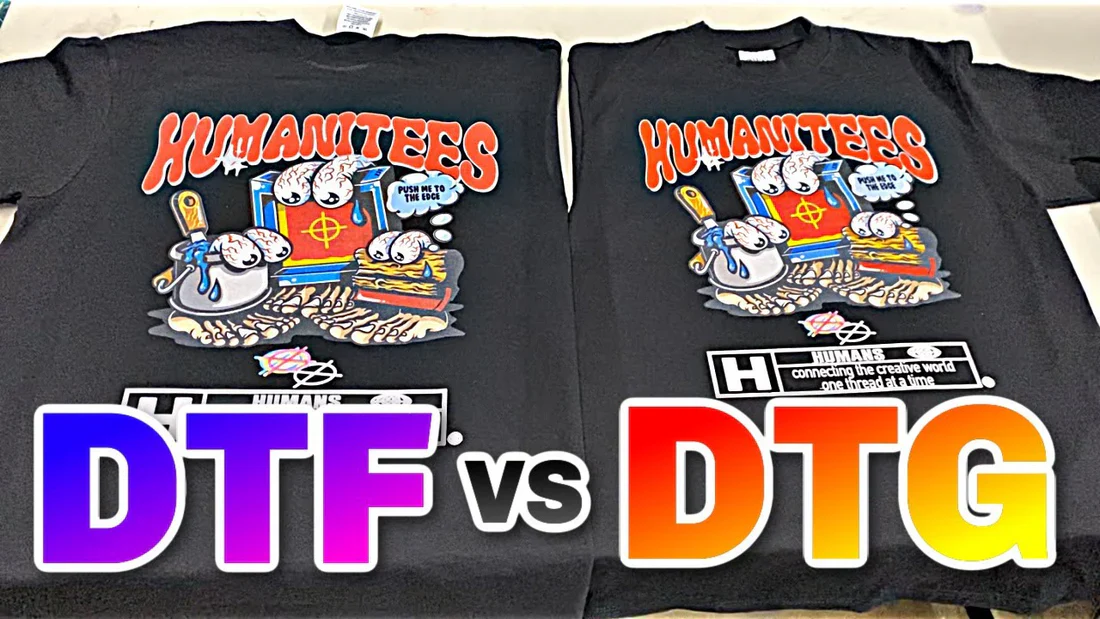
Below are the most important points to consider when comparing DTF vs DTG printing in 2025.
1. Print Quality & Feel
DTG
Soft, smooth feel
Best for photo-realistic designs
Ink absorbs into fibers
DTF
Slightly thicker texture
Colors appear extremely vibrant
Great opacity on dark garments
2. Durability
DTG
Good durability with proper care
Can fade after many washes
DTF
Exceptional durability
Crack-resistant and long-lasting
3. Material Compatibility
DTG
Works best on 100% cotton
Limited compatibility with polyester
DTF
Works on cotton, polyester, nylon, blends, canvas, and more
Much more versatile for POD sellers
4. Production Speed
DTG
Slower printing process
Requires pre-treatment
DTF
Faster for bulk production
No pre-treatment needed
Great for high-volume orders
5. Cost Efficiency
DTG
Lower cost per unit for on-demand printing
Higher ink costs for large batches
DTF
More cost-effective for large runs
Cheaper consumables overall
DTF vs DTG: Which Should You Choose in 2025?
Choose DTG If:
You focus on soft-touch, premium apparel
You sell cotton-heavy products
You offer personalized POD designs
Choose DTF If:
You want maximum durability
You print on multiple fabric types
You handle bulk orders or wholesale jobs
You want vibrant, high-contrast prints on dark fabrics
Final Verdict
In the debate of DTF vs DTG printing, there’s no one-size-fits-all answer.
DTG excels in soft, high-quality prints for cotton garments.
DTF wins in durability, versatility, and production efficiency.
For most print-on-demand brands in 2025, DTF is becoming the preferred choice due to its flexibility and cost advantage — but DTG remains unmatched for premium cotton apparel and ultra-smooth prints.