

E-commerce Insights

Etsy SEO 2026: Crafting High-Converting Titles That Sell

16 min read

Master Etsy SEO for 2026 by learning how to write high-converting product titles. This guide covers keyword research, psychological triggers, and future-proofing strategies to boost your sales.

Etsy SEO 2026: Crafting High-Converting Titles That Sell

Introduction: The Power of a Perfect Etsy Title in 2026

In the bustling marketplace of Etsy, standing out isn't just a wish—it's a necessity. Your product title isn't merely a label; it's the gateway to your shop, the first conversation you have with a potential customer, and a crucial signal to the Etsy algorithm. As we approach 2026, the landscape of online retail, especially on platforms like Etsy, continues to evolve rapidly. The focus has shifted dramatically from simply stuffing keywords to delivering genuine value and understanding buyer intent, a principle Google refers to as "people-first content." This guide offers a comprehensive approach to mastering Etsy title optimization, ensuring your listings are not just seen, but clicked and converted.

Beyond Visibility: Why Titles are Your #1 Conversion Tool on Etsy

Think about it: before a shopper can appreciate your beautiful handmade item or unique digital product, they need to find it. And once they find it in a sea of search results, they need a compelling reason to click. That's where your title shines. It's the first impression, telling both the Etsy algorithm what your item is about and the human shopper why they should care. As an experienced professional in this topic, MerchFox often emphasizes that while visibility is important, conversion is the ultimate goal. A well-crafted title, therefore, isn't just about showing up in search; it's about enticing that click that leads to a sale. This guide is your ultimate resource for Etsy SEO 2026: A guide to high-converting titles, designed to move you beyond basic keyword tactics to a value-driven, buyer-centric strategy.

Navigating the Evolving Etsy Landscape: What's New for Titles?

Etsy's algorithm, like Google's, is continuously refined to prioritize relevancy and a positive user experience. This means the old tactics of keyword repetition are less effective and can even be detrimental. Increased competition on Etsy also means your titles need to work harder than ever. They must be precise, engaging, and reflective of what a modern buyer is truly searching for. The key for 2026 is adaptability and a deep understanding of both human psychology and algorithm mechanics.

Understanding the Etsy Algorithm: How Titles Drive Discovery & Clicks

Understanding the Etsy Algorithm: How Titles Drive Discovery & Clicks

For your products to sell, they first need to be discovered. The Etsy algorithm acts as a sophisticated matchmaker, connecting buyers with the items they're looking for. Your titles play a starring role in this process.

Etsy Search Ranking Factors & Title Relevance

When a shopper types a query into Etsy's search bar, the algorithm scans product titles, tags, categories, and descriptions to find the most relevant listings. Keywords in your title are paramount; they tell Etsy exactly what your item is. Incorporating both broad and specific (long-tail) keywords within your title helps Etsy accurately categorize your product and match it with diverse search queries. Consider the "Needs Met" concept from Google's Quality Rater Guidelines: a good Etsy title should clearly meet the user's intent. If someone searches for a "personalized wedding gift for couple," a title like "Custom Engagement Present for Bride & Groom" might hit the mark better than just "Wedding Gift."

The Click-Through Rate (CTR) Connection: Beyond Just Appearing

Appearing in search results is only half the battle. Once your listing is visible, its title and thumbnail image must compel a click. This is where Click-Through Rate (CTR) comes in. A high CTR signals to Etsy that your listing is highly relevant and appealing to shoppers, even if it's not the very first result. Etsy's algorithm often rewards listings with higher CTRs by boosting their visibility further. This creates a positive feedback loop: a great title gets more clicks, which improves your ranking, leading to even more clicks. Thus, crafting high-converting Etsy titles is about making an immediate, persuasive argument in a few short words.

The Foundation: Expert Keyword Research for High-Converting Etsy Titles

The Foundation: Expert Keyword Research for High-Converting Etsy Titles

Effective keyword research is the bedrock of any successful Etsy SEO strategy. It’s not just about guessing what people type; it’s about understanding their needs, desires, and the specific language they use.

Starting with Your Customer: Buyer Persona & Search Intent

Before you even think about tools, think about your customer. Who are they? What problems are they trying to solve, or what desires are they trying to fulfill? This "people-first" principle is paramount. Are they looking for a unique birthday gift, a specific piece of home decor, or supplies for a craft project? Understanding their buyer persona and search intent allows you to anticipate the keywords they’ll use. For example, a new parent might search for "organic baby blanket" while a grandparent might search for "heirloom baby shower gift." Both want a blanket, but their intent and keywords differ significantly.

Leveraging Etsy's Internal Search: Your First & Best Tool

Etsy's own search bar is a goldmine for keyword ideas. Start typing a term related to your product and watch the auto-suggest feature in action. These are real, commonly searched phrases directly from Etsy users. Pay attention to how competitors phrase their titles, especially top-performing shops. What common threads do you see in their Etsy product title strategy? This direct insight into user behavior within the platform is invaluable for Etsy title optimization.

External Tools for Deep Dive Keyword Research (eRank, Marmalead, Ahrefs, SEMrush)

For a more comprehensive approach, specialized SEO tools can offer deeper insights:

  • eRank & Marmalead: These are specifically designed for Etsy sellers, providing data on search volume, competition, trends, and even long-tail keyword suggestions unique to the platform. They can help you identify keywords with good search volume but lower competition.

  • Ahrefs & SEMrush: While broader SEO tools, they can still be useful for identifying general market trends, seasonal keywords, and understanding how your product might be searched for on Google, which can also drive traffic to Etsy listings. Use these tools to identify seasonal keywords (e.g., "Christmas ornament," "Valentine's Day gift") and trending phrases that you can strategically incorporate into your titles for timely updates.

Long-Tail vs. Short-Tail Keywords: Finding the Right Balance

  • Short-tail keywords (e.g., "necklace," "mug") are broad, high-volume terms. They offer visibility but face immense competition and often have lower conversion rates because the searcher's intent isn't very specific.

  • Long-tail keywords (e.g., "sterling silver personalized initial necklace," "funny coffee mug for dog lovers") are more specific, have lower search volume, but incredibly high conversion rates. Why? Because the searcher knows exactly what they want.

The best strategy for Etsy SEO 2026 is to use a balanced approach: start with a strong short-tail keyword and then expand with several relevant long-tail phrases. This optimizes for both broad reach and specific intent, helping you write Etsy titles that convert.

Anatomy of a High-Converting Etsy Product Title (Step-by-Step for 2026)

Crafting a title is an art and a science. It requires careful consideration of keyword placement, descriptive language, and user experience. Let's break down the essential components for your Etsy title optimization.

The Primary Keyword Placement: Your Most Crucial Real Estate

Your primary keyword, the absolute most important term describing your product, should almost always be at the very beginning of your title. This is prime real estate. Etsy's algorithm gives more weight to keywords appearing earlier, and human eyes scan from left to right. For instance, if you sell "handmade ceramic mugs," starting your title with "Handmade Ceramic Mug" immediately tells both the algorithm and the buyer what your item is. This clarity is paramount for an effective Etsy product title strategy.

Integrating Secondary Keywords & Descriptive Attributes

After your primary keyword, strategically weave in secondary keywords and descriptive attributes. These provide more context and help capture long-tail searches. Think about:

  • Material: "Sterling Silver," "Organic Cotton," "Resin"

  • Color: "Navy Blue," "Rose Gold"

  • Size/Dimensions: "Small," "Large," "12 oz"

  • Occasion: "Wedding Gift," "Birthday Present," "Baby Shower"

  • Recipient: "Gift for Her," "Dad Gift," "Pet Owner"

  • Style: "Boho," "Minimalist," "Rustic"

  • Quantity: "Set of 4"

  • Personalization: "Custom," "Engraved," "Monogrammed"

The trick here is using natural language. Instead of "Mug Ceramic Funny Dog Lover Coffee Mug," aim for "Funny Coffee Mug for Dog Lovers | Unique Ceramic Dog Owner Gift." This ensures readability while hitting multiple keywords, which is a best Etsy title practice.

The Power of Benefit-Driven & Problem-Solving Language

Don't just describe your product; sell its benefits and solutions. Shoppers buy outcomes, not just items. Instead of a dry title like "Blue Scarf," consider "Cozy Blue Infinity Scarf – Perfect Winter Gift for Her | Warm & Stylish Accessory." This title evokes emotion ("Cozy"), highlights a benefit ("Warm & Stylish"), and identifies a use case ("Winter Gift"). It taps into the buyer's aspirations and needs, making your title more compelling and boosting your Etsy titles that convert potential.

Crafting Clarity & Readability: The Human Element

Remember, a human is ultimately reading your title. Avoid excessive capitalization (it looks like shouting) and overuse of special characters like asterisks or emojis, which can appear spammy and unprofessional. Use logical separators like commas, slashes, or dashes to group related keywords and improve readability: "Handmade Leather Wallet | Personalized Men's Bifold | Custom Engraved Gift for Him." This makes your title scannable and digestible, reflecting a "people-first" approach.

Maximizing Character Limits: Every Space Counts

Etsy titles typically have a character limit (around 140 characters, though it can vary slightly). You need to be concise yet comprehensive. Prioritize your most important keywords and attributes at the beginning, as titles often get truncated on mobile devices or in search results. Ensure the critical information is visible in the first 60-80 characters. This strategic use of space is vital for maximizing visibility and clicks across all devices.

Incorporating Unique Selling Propositions (USPs) & Brand Voice

What makes your product truly special? Is it handmade with a unique technique, eco-friendly, customizable, or does it ship incredibly fast? Weave your USPs into your title. For example, "Hand-Painted Watercolor Landscape | Custom Art Print | Sustainable Paper" highlights quality, personalization, and environmental consciousness. Infusing a subtle hint of your brand's personality, without sacrificing clarity, can also make your title memorable and distinctive.

Advanced Strategies for Title Optimization & Conversion

Once you have the basics down, it’s time to move into advanced tactics that can truly supercharge your titles and drive higher conversion rates.

A/B Testing Your Titles: Data-Driven Decisions for Higher Conversion

Don't just guess what works; test it! A/B testing involves creating two slightly different versions of your title for the same product and tracking which one performs better in terms of views, clicks, and sales over a set period. For instance, you might test "Personalized Leather Journal | Custom Engraved Diary" against "Custom Leather Journal | Monogrammed Gift for Writers." Change only one element at a time to isolate the impact. Tools like eRank can help track performance metrics, providing invaluable data for your Etsy title optimization. This scientific approach ensures your efforts are based on actual buyer behavior.

Seasonal & Trend-Based Title Updates

The retail calendar is full of opportunities. Strategically update your titles to align with holidays, seasons, and trending events. A "Handmade Heart Necklace" can become "Valentine's Day Gift for Her | Love Heart Pendant" in January, then revert back or transform into a "Mother's Day Gift" later. Stay aware of emerging trends within your niche – is a particular color or style gaining popularity? Integrating these timely keywords can capture spikes in search volume. This proactive approach is a cornerstone of Etsy SEO 2026.

Competitor Title Analysis: Learning from the Best (and Worst)

Observe what successful competitors in your niche are doing. Analyze their top-performing listings. What keywords do they use? How do they structure their titles? What benefits do they highlight? Look for patterns, but also identify gaps. Where can your titles be more specific, more benefit-driven, or more unique? The goal isn't to copy, but to gather inspiration and identify opportunities to differentiate your own Etsy product title strategy.

Understanding Buyer Psychology: Scarcity, Urgency, & Social Proof in Titles

Subtly incorporating psychological triggers can encourage immediate action.

  • Scarcity: "Limited Edition Hand-Painted Mug"

  • Urgency: "Ready to Ship | Fast Delivery Gift" (Use ethically and only if true)

  • Social Proof: While direct numbers are hard to put in titles, terms like "Bestselling" (if accurate and allowed by Etsy) can convey popularity.

These elements, when used responsibly and ethically, can tip a browsing shopper into a buying customer, significantly improving your Etsy titles that convert.

Common Etsy Title Mistakes to Avoid (Aligning with Spam Policies)
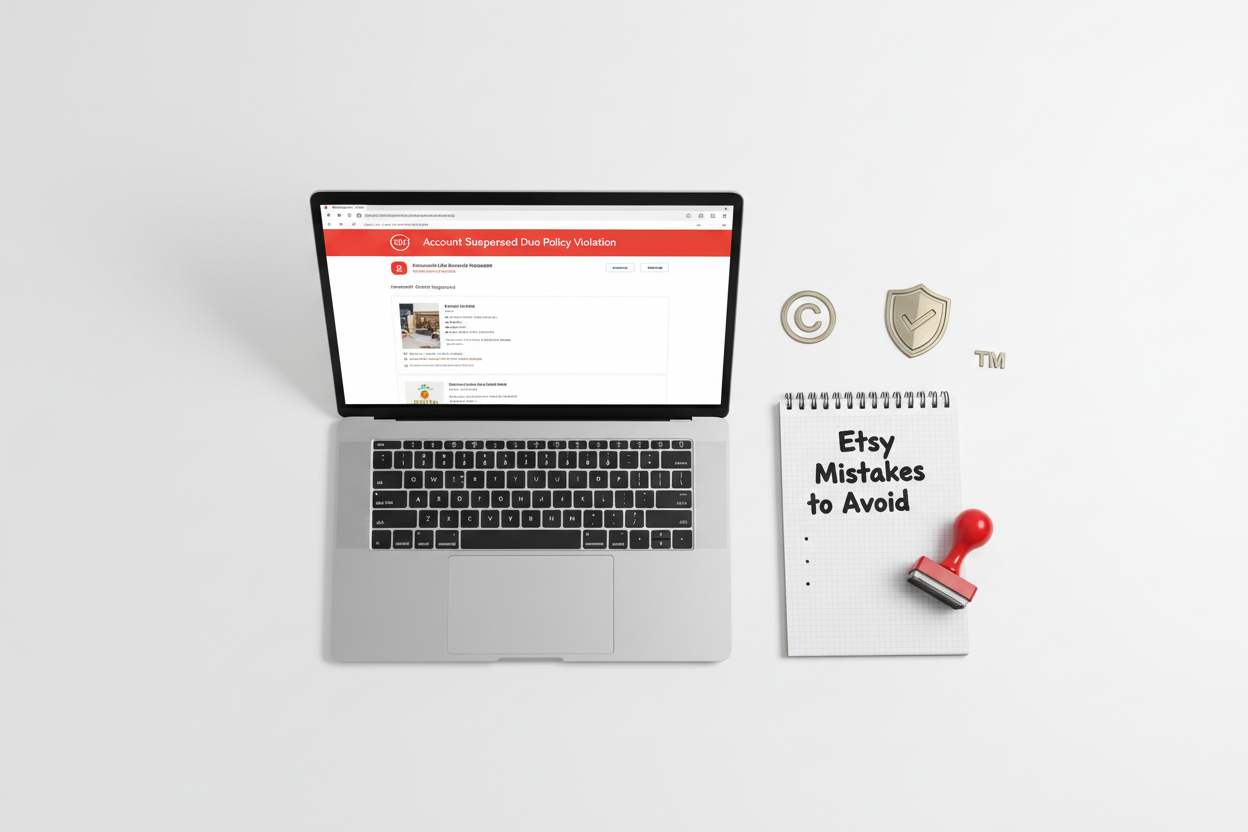
Common Etsy Title Mistakes to Avoid (Aligning with Spam Policies)

While the goal is to optimize for search, there are crucial pitfalls to steer clear of. Making these mistakes can not only harm your rankings but can also lead to Etsy penalties, undermining all your hard work.

Keyword Stuffing: The #1 Sin Against "People-First Content"

This is perhaps the most critical mistake to avoid, a direct violation of Google's "people-first" content guidelines, which Etsy largely aligns with. Keyword stuffing looks like this: "Handmade Ceramic Mug Mug Ceramic Coffee Mug Tea Mug Gift Mug Unique Mug." This practice doesn't just annoy shoppers; it confuses the algorithm and signals low quality, leading to lower rankings. Your titles must read naturally and make sense to a human, first and foremost. As MerchFox advises, prioritize clarity and value over relentless repetition.

Irrelevant Keywords & Misleading Information

Never use keywords that are unrelated to your product just to gain visibility. Listing a "Men's Wallet" with "Women's Purse" keywords is misleading. This generates irrelevant clicks, frustrates buyers, and ultimately hurts your shop's reputation and conversion rates. Etsy (and Google) prioritize accurate and trustworthy information, directly relating to the E-E-A-T principle. Your title should always reflect exactly what the buyer will receive.

Excessive Capitalization & Punctuation Abuse

Writing your entire title in ALL CAPS or using excessive exclamation points ("!!!") or symbols ("***") is unprofessional and can be perceived as spammy. It makes your title difficult to read and can deter potential buyers. Maintain a professional and legible aesthetic for your titles.

Neglecting Readability for "Algorithm Optimization"

Always remember, algorithms don't buy products, people do. If your title is a jumble of keywords that barely makes sense to a human, it will have a low CTR, regardless of how many keywords it contains. The best Etsy titles achieve a harmonious balance: keyword-rich enough for the algorithm, yet compelling and readable for the customer.

"Set it and Forget it": Why Continuous Optimization is Key

The Etsy marketplace is dynamic. Trends change, keywords gain and lose popularity, and your competitors adjust their strategies. Treating your titles as a "set it and forget it" task is a recipe for stagnation. Regularly review your analytics, perform fresh keyword research, and be prepared to update your titles seasonally or in response to new trends. Continuous optimization is a hallmark of Etsy SEO 2026 success.

Future-Proofing Your Etsy Titles for 2026 & Beyond
The world of SEO is constantly evolving, with new technologies and user behaviors shaping how we search and discover. To ensure your Etsy shop remains competitive, it's vital to look ahead.

The Rise of AI in Search: Adapting to Semantic Understanding

Artificial intelligence is increasingly powering search engines, both on Etsy and Google. This means algorithms are moving beyond simple keyword matching to understanding the intent and meaning (semantics) behind a search query. Therefore, your titles need to be more than just a string of keywords; they need to be comprehensive, natural language descriptions that truly convey what your product is and who it's for. Focus on using varied, related terms and natural phrasing rather than exact-match repetition.

Voice Search Optimization: Thinking Conversationally

With the proliferation of smart speakers and virtual assistants, voice search is becoming more common. People tend to speak in full sentences and ask questions when using voice search (e.g., "Alexa, find me a handmade ceramic mug for a gift"). Consider how your product would be described in a conversational query. While you can't put full sentences in your title, you can incorporate phrases that sound natural in conversation, making your titles more adaptable to future search methods.

Emphasizing E-E-A-T (Experience, Expertise, Authoritativeness, Trustworthiness) in Titles

Google's E-E-A-T framework, which emphasizes Experience, Expertise, Authoritativeness, and Trustworthiness, is also implicitly relevant to Etsy. While you might not directly state "expert" in your title, you can convey these qualities through:

  • Clarity: A clear, unambiguous title builds trust.

  • Specificity: Using precise descriptors (e.g., "925 Sterling Silver") shows expertise.

  • Quality Descriptors: Highlighting unique materials or processes can convey experience. A title that accurately and comprehensively describes a high-quality product inherently projects E-E-A-T. This links directly back to Google's core principles for high-quality content, ensuring your Etsy SEO 2026: A guide to high-converting titles remains effective.

The Enduring Power of the "People-First" Approach

Ultimately, regardless of algorithm changes or technological advancements, the "people-first" approach will always be the best long-term strategy. Focus on creating titles that genuinely help your customers find exactly what they're looking for, answer their immediate questions, and evoke interest. When you prioritize the user's needs and provide genuine value, your titles will naturally perform better across all platforms and algorithms, now and in the future.

Actionable Checklist: Your High-Converting Etsy Title Strategy for 2026

Here’s a quick summary to kickstart your title optimization:

  • Understand Your Customer: Who are they, and what are they searching for?

  • Do Thorough Keyword Research: Use Etsy's search bar and external tools.

  • Prioritize Primary Keyword Placement: Put your most important keyword first.

  • Integrate Secondary Keywords Naturally: Use descriptive attributes and long-tail phrases.

  • Highlight Benefits & Solutions: Sell the outcome, not just the product.

  • Ensure Readability: Avoid keyword stuffing, excessive caps, or spammy punctuation.

  • Maximize Character Limits: Be concise, but include all vital information.

  • A/B Test Your Titles: Make data-driven decisions.

  • Update Seasonally & Trend-Based: Stay relevant to current events.

  • Avoid Common Mistakes: No keyword stuffing or misleading info.

  • Think "People-First": Always write for your human customer.

  • Future-Proof: Consider AI and voice search in your phrasing.

Conclusion: Unlock Your Etsy Shop's Full Potential with Optimized Titles

Mastering the art of writing high-converting Etsy titles is more crucial than ever as we move into 2026. It's a blend of strategic keyword placement, an understanding of buyer psychology, and a commitment to creating value-driven content that resonates with both algorithms and human shoppers. By implementing the strategies outlined in this guide, you're not just optimizing for search engines; you're building a more engaging, trustworthy, and ultimately more successful Etsy shop.

Remember, consistent effort and a willingness to adapt are key. The insights shared by MerchFox throughout this guide are designed to empower you with the knowledge and tools to stand out. Start optimizing your titles today, track your results, and watch your conversions soar. Your Etsy shop's full potential is waiting to be unlocked!


Written by

John Nguyen

Print-on-demand tips, seller guides, and product updates from the MerchFox editorial team.

View author profile →

Ready to scale your POD store?

Connect your shop and start selling with MerchFox fulfillment.

Get started free

Keep reading

Related articles

All articles →
How to Start a Stationery Business: Your Complete 2025 Guide to Success

How to Start a Stationery Business: Your Complete 2025 Guide to Success

Starting a stationery business has never been more accessible or profitable than it is today. With the global stationery market valued at over $150 billion and growing steadily, there's tremendous opportunity for entrepreneurs ready to dive into this creative industry. Whether you're passionate about custom stationery design or looking to build a sustainable passive income stream, this comprehensive guide will walk you through every step of launching your successful venture.

Read article
The Ultimate Step-by-Step Guide on How to Make Custom Bumper Stickers at Home

The Ultimate Step-by-Step Guide on How to Make Custom Bumper Stickers at Home

Learn how to make your own unique bumper stickers with our comprehensive guide! Discover multiple DIY methods, from printable vinyl to budget-friendly alternatives, plus design tips, durability secrets, and how to sell your creations.

Read article
The open road is a canvas, and what better way to express yourself, share a laugh, or promote a cause than with a custom bumper sticker? Far from just a decorative piece, a well-placed sticker on your vehicle transforms it into a mobile billboard for your personality or brand. The thought of creating your own might seem daunting, but it’s an incredibly rewarding and surprisingly straightforward DIY project. From personalizing your ride to crafting unique gifts, diving into the world of how to make your own bumper stickers opens up a realm of creative possibilities.  The beauty of DIY bumper stickers lies in their personalization and cost-effectiveness. You’re not limited by mass-produced designs, allowing you to create truly unique, eye-catching visuals. Plus, it's a fun hobby that can even blossom into a profitable side hustle. This comprehensive guide will cover everything you need to know, from multiple reliable methods and essential tools to clever design tips and advanced considerations for durability. Here at MerchFox, we’ve explored the ins and outs of custom creations, and we’re excited to share our insights to help you get started on your bumper sticker journey.  Before You Begin: Defining Your Bumper Sticker Project Before you gather your materials and fire up your design software, take a moment to clarify your project's scope. This initial planning stage is crucial for choosing the right method and materials for your homemade bumper stickers.  2.1. Purpose: Personal Expression, Gifts, Branding, or Resale? Are you looking to simply adorn your own car with a funny quote, create a thoughtful gift for a friend, or perhaps promote your small business? Maybe you're even exploring how to make your own bumper stickers with the intent to sell them. Your ultimate purpose will significantly influence your material choices and desired durability. For a personal touch, simple methods might suffice, but for branding or resale, professional-grade materials and longevity become paramount.  2.2. Durability Needs: Indoor vs. Outdoor, Temporary vs. Long-Lasting, Weather-Resistance. A sticker for an indoor laptop won't need the same robust protection as one exposed to sun, rain, and road grime. For truly outdoor-ready, waterproof bumper stickers, weather-resistance and UV protection are non-negotiable. Consider how long you want your sticker to last and under what conditions it will be displayed. This will guide your selection of laminates and printing materials.  2.3. Design Ideas: Brainstorming Themes, Messages, Visual Style. This is where your creativity truly comes alive! Think about what you want your custom bumper stickers to communicate. Will it be humorous, political, artistic, or informative? Sketch out some ideas, consider fonts, colors, and imagery. A strong initial design concept will streamline the entire process, ensuring your final product effectively conveys your message.  Essential Materials & Tools for Homemade Bumper Stickers Having the right arsenal of materials and tools is key to successful DIY bumper stickers. Fortunately, most items are readily available, often found at your local craft store or online.  3.1. Design Software/Tools Your design journey starts here.  Computer-based: For professional results, programs like Adobe Illustrator or Photoshop offer extensive control. However, user-friendly alternatives like Canva (which, as Royal Elements notes, is excellent for beginners) provide templates and easy-to-use interfaces. GIMP is a powerful free option for image manipulation. Hand-drawing: If you prefer a more artistic touch, good old-fashioned markers, pens, and paper can be used to create your design, which can then be scanned into your computer for printing. 3.2. Printing & Base Materials This is where your design comes to life on a physical surface.  Printable Vinyl: This is the gold standard for durable, printable vinyl bumper stickers. You can find white, clear, matte, or glossy options specifically designed for inkjet or laser printers. Brands like Royal Elements are popular choices among DIY enthusiasts. Regular Paper: For a super budget-friendly alternative, as seen in Instructables' "Nebsi Method," standard printer paper can be used, though it will require significant protection later. 3.3. Protection & Lamination Crucial for transforming printed designs into resilient homemade bumper stickers.  Self-adhesive Laminating Sheets: These are often the key to waterproofing and UV protection, particularly highlighted in both Instructables' and Royal Elements' methods. They come in various finishes (glossy, matte) and sizes. Clear spray sealant (alternative): While not as robust as laminating sheets, a clear acrylic spray can offer some protection against moisture and UV rays. 3.4. Cutting Tools To give your stickers their final shape.  Scissors or craft knife: For simple shapes or when you're just starting out, a good pair of sharp scissors or a craft knife with a cutting mat will do the trick. Cutting machine (Cricut, Silhouette): For precision, intricate designs, or if you plan to make many stickers, a cutting machine like a Cricut or Silhouette is an invaluable investment. 3.5. Application Aids For a smooth, professional finish.  Squeegee: Helps press out air bubbles during application. Rubbing alcohol: Essential for thoroughly cleaning the surface of your vehicle before applying the sticker, ensuring maximum adhesion. 4. Method 1: The Popular Printable Vinyl Bumper Sticker Guide This method, often employed by experienced DIYers and detailed in resources like Royal Elements and wikiHow, is considered the benchmark for creating high-quality, durable custom bumper stickers at home.  Method 1: The Popular Printable Vinyl Bumper Sticker Guide Method 1: The Popular Printable Vinyl Bumper Sticker Guide 4.1. Step 1: Design Your Masterpiece. Start by creating your artwork in your chosen design software. Focus on high-resolution graphics to ensure crisp lines and vibrant colors. Pay attention to the correct dimensions for your desired sticker size. If you’re incorporating text, ensure it’s legible even from a distance, choosing bold fonts and contrasting colors. MerchFox often advises using a CMYK color profile if your printer supports it, as it’s better for print accuracy than RGB.  4.2. Step 2: Print Your Design on Vinyl. Load your printable vinyl into your home printer (inkjet or laser, depending on your vinyl type). It's crucial to select the correct printer settings – typically "photo quality" or "glossy paper" – to ensure the ink adheres properly and colors are vibrant. Print a test sheet on regular paper first to check colors and layout. Once printed on vinyl, allow ample time for the ink to dry completely, usually several hours, to prevent smudging.  4.3. Step 3: Laminate for Ultimate Protection (Crucial for Durability). This is perhaps the most critical step for outdoor waterproof bumper stickers. Laminating protects your sticker from UV fading, water damage, and scratches. Carefully peel back a small corner of your self-adhesive laminating sheet and align it with your printed vinyl. Slowly and steadily press the laminate down, using a squeegee or even a credit card to smooth it out and push any air bubbles towards the edges. Take your time here – a smooth lamination is key to longevity.  4.4. Step 4: Cut Out Your Bumper Sticker. With your design now printed and protected, it’s time to cut it out. For simple shapes, sharp scissors or a craft knife can achieve a clean edge. If you’re using a cutting machine like a Cricut or Silhouette, follow your machine’s instructions for calibrating and cutting, which allows for incredibly precise and complex shapes.  4.5. Step 5: Prepare and Apply Your Sticker. Proper application ensures your sticker stays put. First, thoroughly clean the application surface on your vehicle with rubbing alcohol and let it dry completely. This removes any wax, dirt, or grease that could prevent adhesion. Slowly peel the backing off your bumper sticker. Position it carefully, then apply it from one side to the other, using a squeegee to press it down firmly and work out any remaining air bubbles. For best results, MerchFox recommends applying in moderate temperatures, avoiding extreme heat or cold.  5. Method 2: The Budget-Friendly "Nebsi Production Method" (Laminate & Paper) For those looking for a cost-effective alternative or a more temporary solution, the "Nebsi Production Method," popularized on Instructables, is an ingenious way to create homemade bumper stickers using regular paper and laminating sheets.  Method 2: The Budget-Friendly "Nebsi Production Method" (Laminate & Paper) Method 2: The Budget-Friendly "Nebsi Production Method" (Laminate & Paper) 5.1. Understanding the "Nebsi Method": This method cleverly uses the laminating sheet not just for protection but also to create a repositionable, adhesive layer. By laminating both the front and back of a regular paper print, you encapsulate the design and create a surface that can be adhered to a car and even repositioned with care. It's a fantastic entry point for how to make your own bumper stickers without investing in specialized vinyl.  5.2. Step 1: Design & Print on Regular Paper. Create your design as usual, but this time, print it onto high-quality regular printer paper. While regular paper won't offer the inherent durability of vinyl, focusing on the best possible print resolution will ensure your colors are vibrant and details are crisp.  5.3. Step 2: Apply Laminate to the Front. Carefully apply a self-adhesive laminating sheet to the front (design side) of your printed paper. This layer protects your design from moisture and wear, giving it a glossy or matte finish depending on your laminate choice. Ensure a smooth, bubble-free application, as this is the primary protective layer.  5.4. Step 3: Apply Laminate to the Back. This is the unique step for the "Nebsi Method." Apply a second laminating sheet to the back of your paper. This second layer, once trimmed with a slight border, creates a temporary, repositionable adhesive surface. When you’re ready to apply, you simply peel off a portion of the backing paper from this laminate.  5.5. Step 4: Trim and Finish. Once both sides are laminated, trim your sticker to the desired shape, leaving a small border of laminate around the design. This border helps seal the paper edges, further protecting it from moisture.  5.6. Benefits & Best Use Cases: The Nebsi Method is incredibly cost-effective, yields a nice glossy finish (if using glossy laminate), and offers easy repositioning, making it ideal for temporary messages or if you frequently change your mind. While not as durable as pure vinyl in extreme conditions, it’s a brilliant way to experiment with custom bumper stickers on a budget.  6. Method 3: Quick & Artistic Hand-Drawn Bumper Stickers For those who love a truly unique, artisanal touch, hand-drawn bumper stickers offer unparalleled originality. This method emphasizes creativity and individual flair over mass production.  Method 3: Quick & Artistic Hand-Drawn Bumper Stickers Method 3: Quick & Artistic Hand-Drawn Bumper Stickers 6.1. Materials: You'll need sturdy cardstock or heavy paper, waterproof markers or paints (like acrylics), and clear contact paper or a spray sealant for protection.  6.2. Process: First, draw or paint your design directly onto the cardstock. Once completely dry, apply clear contact paper smoothly over the entire design for basic waterproofing, or use several coats of a clear spray sealant. After the sealant dries, cut out your design. To apply, you can use double-sided outdoor adhesive tape or magnets for a removable option.  6.3. Best for: This method is perfect for truly unique, artistic, one-off designs or protest signs where the raw, handmade aesthetic adds to the message. While less durable than printed vinyl methods, the authenticity is undeniable.  7. Maximizing Durability and Longevity: Pro Tips for Your Bumper Stickers Creating homemade bumper stickers that last requires attention to detail, especially when aiming for outdoor durability.  Maximizing Durability and Longevity: Pro Tips for Your Bumper Stickers Maximizing Durability and Longevity: Pro Tips for Your Bumper Stickers 7.1. The Importance of Quality Lamination: As MerchFox often stresses, lamination is your first line of defense. A high-quality laminating sheet provides critical UV resistance (preventing fading), waterproofing (protecting against rain and washes), and scratch protection (guarding against minor abrasions). Don't skimp on this step for outdoor stickers.  7.2. Material Selection: Choosing weather-resistant printable vinyl, designed specifically for outdoor use, provides a superior base. These materials are formulated to withstand environmental stressors better than standard paper or indoor vinyls.  7.3. Proper Surface Preparation: The longevity of your sticker is directly tied to its adhesion. Always clean the application surface thoroughly with rubbing alcohol to remove any contaminants. A clean, dry surface ensures maximum stick and prevents premature peeling.  7.4. Handling & Storage: Before application, store your stickers flat in a cool, dry place away from direct sunlight. Improper handling, like bending or creasing, can compromise the adhesive or lamination, leading to issues later on.  8. From Hobby to Business: How to Make Bumper Stickers to Sell Turning your passion for custom bumper stickers into a profitable venture is entirely achievable. Many successful businesses started in a home workshop, as resources like wikiHow and Swagify highlight.  From Hobby to Business: How to Make Bumper Stickers to Sell From Hobby to Business: How to Make Bumper Stickers to Sell 8.1. Market Research: Identify trends, popular niches, and target audiences. What messages resonate? What visual styles are currently popular? Research what's selling well on platforms like Etsy or local craft markets.  8.2. Designing for Profit: To create marketable designs, focus on uniqueness, high-quality aesthetics, and broad appeal within your chosen niche. Think about witty phrases, compelling graphics, or designs that speak to specific interests.  8.3. Material & Production Costs: Accurately calculate all your expenses, including printable vinyl, laminating sheets, ink, cutting blades, and even packaging. Understanding these costs is crucial for setting profitable prices. For bulk production, a cutting machine becomes highly cost-effective.  8.4. Pricing Your Bumper Stickers: Consider your production costs, the perceived value of your design, and competitor pricing. Aim for a price that covers your expenses, provides a reasonable profit, and remains attractive to buyers.  8.5. Marketing & Sales Channels: Etsy, Shopify, and other e-commerce platforms are excellent for online sales. Don't overlook local markets, craft fairs, or even collaborating with local businesses. Social media, particularly Instagram and TikTok, are powerful tools for showcasing your designs and reaching potential customers.  8.6. Packaging & Shipping: Presenting a professional product enhances perceived value. Use sturdy envelopes or mailers, and consider adding a small branded insert. Research cost-effective and reliable shipping methods for your DIY bumper stickers.  9. Troubleshooting Common Bumper Sticker Issues Even with the best planning, sometimes things don't go perfectly. Knowing how to troubleshoot common problems can save your project.  Troubleshooting Common Bumper Sticker Issues  Fading colors or cracking: This usually indicates insufficient UV protection. Ensure you're using quality laminating sheets with UV inhibitors, or a clear spray sealant specifically designed for outdoor use. Bubbles or peeling during application: Often caused by improper surface cleaning or rushed application. Clean thoroughly, apply slowly with a squeegee from the center outwards, and work in moderate temperatures. Difficulty removing old stickers cleanly: For stubborn stickers, heat (from a hairdryer on a low setting) can soften the adhesive. Plastic scrapers and adhesive removers (like Goo Gone) can help with residue, but always test on an inconspicuous area first. Ink smudging or bleeding during printing: This is typically due to incorrect printer settings (e.g., wrong paper type selected) or not allowing enough drying time before handling or laminating. Ensure your printer settings match your vinyl type and be patient with drying. 10. Frequently Asked Questions (FAQs) About DIY Bumper Stickers Frequently Asked Questions (FAQs) About DIY Bumper Stickers  Q: How long do homemade bumper stickers typically last? A: The lifespan of homemade bumper stickers varies greatly depending on the method and materials used. High-quality printable vinyl with robust lamination can last 3-5 years outdoors. Budget-friendly paper methods might last a few months to a year, especially if exposed to harsh weather.  Q: Can I use a regular home printer (inkjet/laser)? A: Yes, absolutely! Both inkjet and laser printers can be used to print bumper stickers at home, provided you choose printable vinyl or paper specifically designed for your printer type. Always check the product description of your chosen material.  Q: Are all homemade bumper stickers waterproof? A: No, not inherently. To make waterproof bumper stickers, you must laminate them with self-adhesive sheets or use a waterproof clear spray sealant. The printable vinyl itself might be water-resistant, but the ink and paper (if used) need protection.  Q: What's the best way to remove an old bumper sticker without damaging my car? A: The safest method involves using heat (a hairdryer on low) to soften the adhesive, then gently peeling the sticker off. For stubborn residue, automotive adhesive removers or rubbing alcohol can be used, but always test on a hidden area first.  Q: Can I make transparent bumper stickers at home? A: Yes, you can! You'll need to purchase transparent or clear printable vinyl. The process is similar to white vinyl, but your design will need to account for the transparency of the background. Remember that light colors and whites won't show up well on a transparent sticker without a white underlayer.  11. Conclusion: Your Road to Custom Bumper Sticker Success Starts Now! Conclusion: Your Road to Custom Bumper Sticker Success Starts Now!  There you have it – a comprehensive guide to mastering how to make your own bumper stickers. From selecting your purpose and gathering materials to printing, laminating, and even selling your creations, the journey is both creative and rewarding. Whether you're aiming for personal expression, thoughtful gifts, or a new entrepreneurial venture, the tools and knowledge are now at your fingertips.  Don't be afraid to experiment with different designs, colors, and methods. Each attempt refines your skills and brings you closer to crafting that perfect sticker. As we at MerchFox have seen, the satisfaction of seeing your own custom bumper stickers on a car, a laptop, or even a water bottle is unmatched. So go ahead, unleash your creativity, and let your message hit the road!

The open road is a canvas, and what better way to express yourself, share a laugh, or promote a cause than with a custom bumper sticker? Far from just a decorative piece, a well-placed sticker on your vehicle transforms it into a mobile billboard for your personality or brand. The thought of creating your own might seem daunting, but it’s an incredibly rewarding and surprisingly straightforward DIY project. From personalizing your ride to crafting unique gifts, diving into the world of how to make your own bumper stickers opens up a realm of creative possibilities. The beauty of DIY bumper stickers lies in their personalization and cost-effectiveness. You’re not limited by mass-produced designs, allowing you to create truly unique, eye-catching visuals. Plus, it's a fun hobby that can even blossom into a profitable side hustle. This comprehensive guide will cover everything you need to know, from multiple reliable methods and essential tools to clever design tips and advanced considerations for durability. Here at MerchFox, we’ve explored the ins and outs of custom creations, and we’re excited to share our insights to help you get started on your bumper sticker journey. Before You Begin: Defining Your Bumper Sticker Project Before you gather your materials and fire up your design software, take a moment to clarify your project's scope. This initial planning stage is crucial for choosing the right method and materials for your homemade bumper stickers. 2.1. Purpose: Personal Expression, Gifts, Branding, or Resale? Are you looking to simply adorn your own car with a funny quote, create a thoughtful gift for a friend, or perhaps promote your small business? Maybe you're even exploring how to make your own bumper stickers with the intent to sell them. Your ultimate purpose will significantly influence your material choices and desired durability. For a personal touch, simple methods might suffice, but for branding or resale, professional-grade materials and longevity become paramount. 2.2. Durability Needs: Indoor vs. Outdoor, Temporary vs. Long-Lasting, Weather-Resistance. A sticker for an indoor laptop won't need the same robust protection as one exposed to sun, rain, and road grime. For truly outdoor-ready, waterproof bumper stickers, weather-resistance and UV protection are non-negotiable. Consider how long you want your sticker to last and under what conditions it will be displayed. This will guide your selection of laminates and printing materials. 2.3. Design Ideas: Brainstorming Themes, Messages, Visual Style. This is where your creativity truly comes alive! Think about what you want your custom bumper stickers to communicate. Will it be humorous, political, artistic, or informative? Sketch out some ideas, consider fonts, colors, and imagery. A strong initial design concept will streamline the entire process, ensuring your final product effectively conveys your message. Essential Materials & Tools for Homemade Bumper Stickers Having the right arsenal of materials and tools is key to successful DIY bumper stickers. Fortunately, most items are readily available, often found at your local craft store or online. 3.1. Design Software/Tools Your design journey starts here. Computer-based: For professional results, programs like Adobe Illustrator or Photoshop offer extensive control. However, user-friendly alternatives like Canva (which, as Royal Elements notes, is excellent for beginners) provide templates and easy-to-use interfaces. GIMP is a powerful free option for image manipulation. Hand-drawing: If you prefer a more artistic touch, good old-fashioned markers, pens, and paper can be used to create your design, which can then be scanned into your computer for printing. 3.2. Printing & Base Materials This is where your design comes to life on a physical surface. Printable Vinyl: This is the gold standard for durable, printable vinyl bumper stickers. You can find white, clear, matte, or glossy options specifically designed for inkjet or laser printers. Brands like Royal Elements are popular choices among DIY enthusiasts. Regular Paper: For a super budget-friendly alternative, as seen in Instructables' "Nebsi Method," standard printer paper can be used, though it will require significant protection later. 3.3. Protection & Lamination Crucial for transforming printed designs into resilient homemade bumper stickers. Self-adhesive Laminating Sheets: These are often the key to waterproofing and UV protection, particularly highlighted in both Instructables' and Royal Elements' methods. They come in various finishes (glossy, matte) and sizes. Clear spray sealant (alternative): While not as robust as laminating sheets, a clear acrylic spray can offer some protection against moisture and UV rays. 3.4. Cutting Tools To give your stickers their final shape. Scissors or craft knife: For simple shapes or when you're just starting out, a good pair of sharp scissors or a craft knife with a cutting mat will do the trick. Cutting machine (Cricut, Silhouette): For precision, intricate designs, or if you plan to make many stickers, a cutting machine like a Cricut or Silhouette is an invaluable investment. 3.5. Application Aids For a smooth, professional finish. Squeegee: Helps press out air bubbles during application. Rubbing alcohol: Essential for thoroughly cleaning the surface of your vehicle before applying the sticker, ensuring maximum adhesion. 4. Method 1: The Popular Printable Vinyl Bumper Sticker Guide This method, often employed by experienced DIYers and detailed in resources like Royal Elements and wikiHow, is considered the benchmark for creating high-quality, durable custom bumper stickers at home. Method 1: The Popular Printable Vinyl Bumper Sticker Guide Method 1: The Popular Printable Vinyl Bumper Sticker Guide 4.1. Step 1: Design Your Masterpiece. Start by creating your artwork in your chosen design software. Focus on high-resolution graphics to ensure crisp lines and vibrant colors. Pay attention to the correct dimensions for your desired sticker size. If you’re incorporating text, ensure it’s legible even from a distance, choosing bold fonts and contrasting colors. MerchFox often advises using a CMYK color profile if your printer supports it, as it’s better for print accuracy than RGB. 4.2. Step 2: Print Your Design on Vinyl. Load your printable vinyl into your home printer (inkjet or laser, depending on your vinyl type). It's crucial to select the correct printer settings – typically "photo quality" or "glossy paper" – to ensure the ink adheres properly and colors are vibrant. Print a test sheet on regular paper first to check colors and layout. Once printed on vinyl, allow ample time for the ink to dry completely, usually several hours, to prevent smudging. 4.3. Step 3: Laminate for Ultimate Protection (Crucial for Durability). This is perhaps the most critical step for outdoor waterproof bumper stickers. Laminating protects your sticker from UV fading, water damage, and scratches. Carefully peel back a small corner of your self-adhesive laminating sheet and align it with your printed vinyl. Slowly and steadily press the laminate down, using a squeegee or even a credit card to smooth it out and push any air bubbles towards the edges. Take your time here – a smooth lamination is key to longevity. 4.4. Step 4: Cut Out Your Bumper Sticker. With your design now printed and protected, it’s time to cut it out. For simple shapes, sharp scissors or a craft knife can achieve a clean edge. If you’re using a cutting machine like a Cricut or Silhouette, follow your machine’s instructions for calibrating and cutting, which allows for incredibly precise and complex shapes. 4.5. Step 5: Prepare and Apply Your Sticker. Proper application ensures your sticker stays put. First, thoroughly clean the application surface on your vehicle with rubbing alcohol and let it dry completely. This removes any wax, dirt, or grease that could prevent adhesion. Slowly peel the backing off your bumper sticker. Position it carefully, then apply it from one side to the other, using a squeegee to press it down firmly and work out any remaining air bubbles. For best results, MerchFox recommends applying in moderate temperatures, avoiding extreme heat or cold. 5. Method 2: The Budget-Friendly "Nebsi Production Method" (Laminate & Paper) For those looking for a cost-effective alternative or a more temporary solution, the "Nebsi Production Method," popularized on Instructables, is an ingenious way to create homemade bumper stickers using regular paper and laminating sheets. Method 2: The Budget-Friendly "Nebsi Production Method" (Laminate & Paper) Method 2: The Budget-Friendly "Nebsi Production Method" (Laminate & Paper) 5.1. Understanding the "Nebsi Method": This method cleverly uses the laminating sheet not just for protection but also to create a repositionable, adhesive layer. By laminating both the front and back of a regular paper print, you encapsulate the design and create a surface that can be adhered to a car and even repositioned with care. It's a fantastic entry point for how to make your own bumper stickers without investing in specialized vinyl. 5.2. Step 1: Design & Print on Regular Paper. Create your design as usual, but this time, print it onto high-quality regular printer paper. While regular paper won't offer the inherent durability of vinyl, focusing on the best possible print resolution will ensure your colors are vibrant and details are crisp. 5.3. Step 2: Apply Laminate to the Front. Carefully apply a self-adhesive laminating sheet to the front (design side) of your printed paper. This layer protects your design from moisture and wear, giving it a glossy or matte finish depending on your laminate choice. Ensure a smooth, bubble-free application, as this is the primary protective layer. 5.4. Step 3: Apply Laminate to the Back. This is the unique step for the "Nebsi Method." Apply a second laminating sheet to the back of your paper. This second layer, once trimmed with a slight border, creates a temporary, repositionable adhesive surface. When you’re ready to apply, you simply peel off a portion of the backing paper from this laminate. 5.5. Step 4: Trim and Finish. Once both sides are laminated, trim your sticker to the desired shape, leaving a small border of laminate around the design. This border helps seal the paper edges, further protecting it from moisture. 5.6. Benefits & Best Use Cases: The Nebsi Method is incredibly cost-effective, yields a nice glossy finish (if using glossy laminate), and offers easy repositioning, making it ideal for temporary messages or if you frequently change your mind. While not as durable as pure vinyl in extreme conditions, it’s a brilliant way to experiment with custom bumper stickers on a budget. 6. Method 3: Quick & Artistic Hand-Drawn Bumper Stickers For those who love a truly unique, artisanal touch, hand-drawn bumper stickers offer unparalleled originality. This method emphasizes creativity and individual flair over mass production. Method 3: Quick & Artistic Hand-Drawn Bumper Stickers Method 3: Quick & Artistic Hand-Drawn Bumper Stickers 6.1. Materials: You'll need sturdy cardstock or heavy paper, waterproof markers or paints (like acrylics), and clear contact paper or a spray sealant for protection. 6.2. Process: First, draw or paint your design directly onto the cardstock. Once completely dry, apply clear contact paper smoothly over the entire design for basic waterproofing, or use several coats of a clear spray sealant. After the sealant dries, cut out your design. To apply, you can use double-sided outdoor adhesive tape or magnets for a removable option. 6.3. Best for: This method is perfect for truly unique, artistic, one-off designs or protest signs where the raw, handmade aesthetic adds to the message. While less durable than printed vinyl methods, the authenticity is undeniable. 7. Maximizing Durability and Longevity: Pro Tips for Your Bumper Stickers Creating homemade bumper stickers that last requires attention to detail, especially when aiming for outdoor durability. Maximizing Durability and Longevity: Pro Tips for Your Bumper Stickers Maximizing Durability and Longevity: Pro Tips for Your Bumper Stickers 7.1. The Importance of Quality Lamination: As MerchFox often stresses, lamination is your first line of defense. A high-quality laminating sheet provides critical UV resistance (preventing fading), waterproofing (protecting against rain and washes), and scratch protection (guarding against minor abrasions). Don't skimp on this step for outdoor stickers. 7.2. Material Selection: Choosing weather-resistant printable vinyl, designed specifically for outdoor use, provides a superior base. These materials are formulated to withstand environmental stressors better than standard paper or indoor vinyls. 7.3. Proper Surface Preparation: The longevity of your sticker is directly tied to its adhesion. Always clean the application surface thoroughly with rubbing alcohol to remove any contaminants. A clean, dry surface ensures maximum stick and prevents premature peeling. 7.4. Handling & Storage: Before application, store your stickers flat in a cool, dry place away from direct sunlight. Improper handling, like bending or creasing, can compromise the adhesive or lamination, leading to issues later on. 8. From Hobby to Business: How to Make Bumper Stickers to Sell Turning your passion for custom bumper stickers into a profitable venture is entirely achievable. Many successful businesses started in a home workshop, as resources like wikiHow and Swagify highlight. From Hobby to Business: How to Make Bumper Stickers to Sell From Hobby to Business: How to Make Bumper Stickers to Sell 8.1. Market Research: Identify trends, popular niches, and target audiences. What messages resonate? What visual styles are currently popular? Research what's selling well on platforms like Etsy or local craft markets. 8.2. Designing for Profit: To create marketable designs, focus on uniqueness, high-quality aesthetics, and broad appeal within your chosen niche. Think about witty phrases, compelling graphics, or designs that speak to specific interests. 8.3. Material & Production Costs: Accurately calculate all your expenses, including printable vinyl, laminating sheets, ink, cutting blades, and even packaging. Understanding these costs is crucial for setting profitable prices. For bulk production, a cutting machine becomes highly cost-effective. 8.4. Pricing Your Bumper Stickers: Consider your production costs, the perceived value of your design, and competitor pricing. Aim for a price that covers your expenses, provides a reasonable profit, and remains attractive to buyers. 8.5. Marketing & Sales Channels: Etsy, Shopify, and other e-commerce platforms are excellent for online sales. Don't overlook local markets, craft fairs, or even collaborating with local businesses. Social media, particularly Instagram and TikTok, are powerful tools for showcasing your designs and reaching potential customers. 8.6. Packaging & Shipping: Presenting a professional product enhances perceived value. Use sturdy envelopes or mailers, and consider adding a small branded insert. Research cost-effective and reliable shipping methods for your DIY bumper stickers. 9. Troubleshooting Common Bumper Sticker Issues Even with the best planning, sometimes things don't go perfectly. Knowing how to troubleshoot common problems can save your project. Troubleshooting Common Bumper Sticker Issues Fading colors or cracking: This usually indicates insufficient UV protection. Ensure you're using quality laminating sheets with UV inhibitors, or a clear spray sealant specifically designed for outdoor use. Bubbles or peeling during application: Often caused by improper surface cleaning or rushed application. Clean thoroughly, apply slowly with a squeegee from the center outwards, and work in moderate temperatures. Difficulty removing old stickers cleanly: For stubborn stickers, heat (from a hairdryer on a low setting) can soften the adhesive. Plastic scrapers and adhesive removers (like Goo Gone) can help with residue, but always test on an inconspicuous area first. Ink smudging or bleeding during printing: This is typically due to incorrect printer settings (e.g., wrong paper type selected) or not allowing enough drying time before handling or laminating. Ensure your printer settings match your vinyl type and be patient with drying. 10. Frequently Asked Questions (FAQs) About DIY Bumper Stickers Frequently Asked Questions (FAQs) About DIY Bumper Stickers Q: How long do homemade bumper stickers typically last? A: The lifespan of homemade bumper stickers varies greatly depending on the method and materials used. High-quality printable vinyl with robust lamination can last 3-5 years outdoors. Budget-friendly paper methods might last a few months to a year, especially if exposed to harsh weather. Q: Can I use a regular home printer (inkjet/laser)? A: Yes, absolutely! Both inkjet and laser printers can be used to print bumper stickers at home, provided you choose printable vinyl or paper specifically designed for your printer type. Always check the product description of your chosen material. Q: Are all homemade bumper stickers waterproof? A: No, not inherently. To make waterproof bumper stickers, you must laminate them with self-adhesive sheets or use a waterproof clear spray sealant. The printable vinyl itself might be water-resistant, but the ink and paper (if used) need protection. Q: What's the best way to remove an old bumper sticker without damaging my car? A: The safest method involves using heat (a hairdryer on low) to soften the adhesive, then gently peeling the sticker off. For stubborn residue, automotive adhesive removers or rubbing alcohol can be used, but always test on a hidden area first. Q: Can I make transparent bumper stickers at home? A: Yes, you can! You'll need to purchase transparent or clear printable vinyl. The process is similar to white vinyl, but your design will need to account for the transparency of the background. Remember that light colors and whites won't show up well on a transparent sticker without a white underlayer. 11. Conclusion: Your Road to Custom Bumper Sticker Success Starts Now! Conclusion: Your Road to Custom Bumper Sticker Success Starts Now! There you have it – a comprehensive guide to mastering how to make your own bumper stickers. From selecting your purpose and gathering materials to printing, laminating, and even selling your creations, the journey is both creative and rewarding. Whether you're aiming for personal expression, thoughtful gifts, or a new entrepreneurial venture, the tools and knowledge are now at your fingertips. Don't be afraid to experiment with different designs, colors, and methods. Each attempt refines your skills and brings you closer to crafting that perfect sticker. As we at MerchFox have seen, the satisfaction of seeing your own custom bumper stickers on a car, a laptop, or even a water bottle is unmatched. So go ahead, unleash your creativity, and let your message hit the road!

Have you ever designed something beautiful on your computer, only to have it come back from the printer looking completely different? It's a common, frustrating experience for many designers and businesses. The vibrant blues become dull purples, and bright greens turn muddy. This isn't a printer conspiracy; it's a fundamental misunderstanding of how colors translate between the digital and physical worlds. As MerchFox often shares from their extensive experience, this color discrepancy is almost always due to the difference between RGB and CMYK color systems.

Read article