



As stores grow, however, that model becomes increasingly difficult to optimize.
A store processing a few dozen orders per day can often rely on a relatively simple workflow. But when volume reaches hundreds or thousands of orders, every small inefficiency becomes more expensive.
That raises an important question:
What if fulfillment isn't simply about processing orders—but about making the right operational decision for every order?
This could become one of the next major shifts in print-on-demand fulfillment.
Fulfillment Is Becoming a Decision-Making Problem

Traditional fulfillment focuses heavily on execution.
An order comes in, and the system follows a predefined process.
But not every order has the same requirements.
Some orders need to move quickly.
Others may require additional quality control.
Some products have different production requirements.
Some destinations may create different shipping considerations.
And some orders may carry a higher operational risk than others.
Treating every order exactly the same can make the entire system less efficient.
Instead, the future of fulfillment may increasingly depend on how intelligently each order is handled from the beginning.
Why This Matters More as Your Store Grows

Imagine processing 20 orders per day.
A small inefficiency may barely be noticeable.
Now imagine processing 500 orders per day.
That same inefficiency is repeated hundreds of times.
A few extra minutes can become hours.
A small error can become dozens of affected orders.
A minor operational delay can eventually lead to:
Reprints
Refunds
Customer complaints
Additional support work
Lost margins
Delayed deliveries
The problem isn't necessarily that the team isn't working hard enough.
The problem may be that the system is making too many unnecessary decisions—or making them too late.
From “Process Every Order” to “Route Every Order Intelligently”
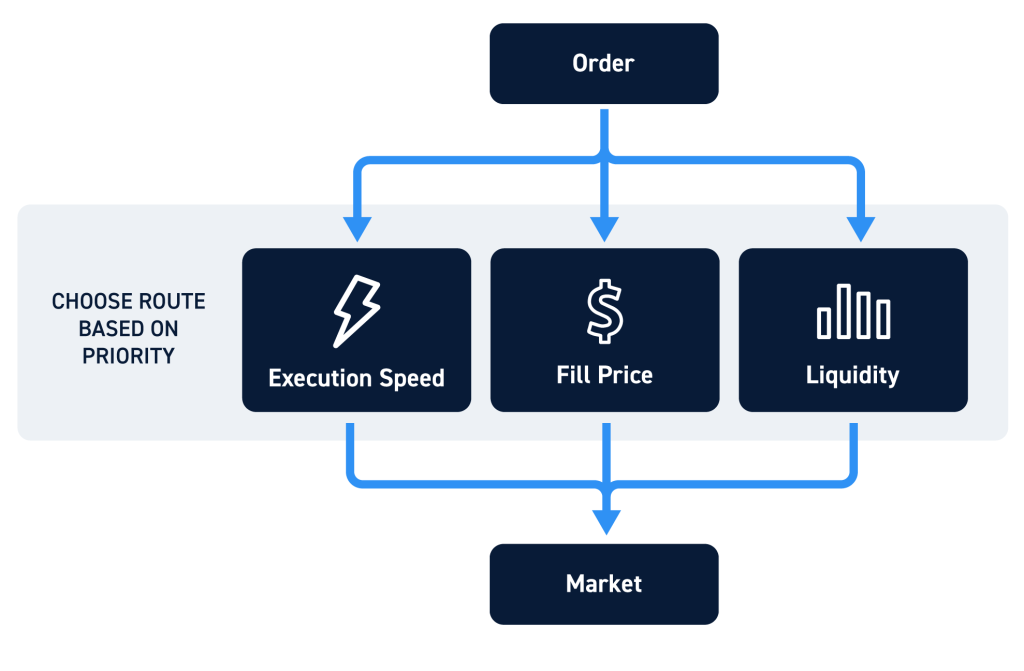
This is where a different fulfillment model begins to make sense.
Instead of forcing every order through exactly the same workflow, an intelligent system could evaluate the characteristics of an order and determine the most appropriate path.
For example:
Standard order → Standard workflow
Time-sensitive order → Priority workflow
Higher-risk order → Additional verification
Complex order → Specialized handling
The objective isn't to make fulfillment more complicated.
Quite the opposite.
The objective is to make the system smarter before problems occur.
The Biggest Opportunity May Be Hidden in the Backend
POD sellers often spend significant time optimizing:
Ads
Designs
Pricing
SEO
Product selection
Conversion rates
These are all important.
But there is another part of the business that directly affects profitability:
What happens after the customer clicks “Buy”?
A sale isn't the end of the process.
It's the beginning of a chain of operational decisions.
If those decisions are made efficiently, more of the original revenue can remain as profit.
If they're handled inefficiently, the store may generate impressive revenue while quietly losing money through operational costs.
That is why fulfillment should no longer be viewed as simply a backend function.
It can become a competitive advantage.
MerchFox Is Exploring What Comes Next
At MerchFox, we're currently exploring a different approach to POD fulfillment.
The goal isn't simply to help sellers process more orders.
It's to explore how fulfillment can become more intelligent—helping sellers make better operational decisions earlier in the order lifecycle.
That means looking beyond:
“How do we fulfill this order?”
and asking:
“What is the best way to handle this order from the beginning?”
The difference may sound small.
At scale, it can become significant.
We are still testing, refining, and validating different approaches, so there is still a lot that cannot be revealed yet.
But the direction is clear.
The Future of POD Fulfillment May Be About Choice

For a long time, fulfillment efficiency was largely measured by one question:
How fast can you process an order?
The next generation of fulfillment may require a broader question:
How intelligently can you process the order?
Speed will still matter.
Accuracy will still matter.
Cost will still matter.
But the ability to choose the right fulfillment path for different situations could become just as important.
And when peak season arrives, those small operational advantages can become much more valuable.
More orders.
More complexity.
More decisions.
The sellers with smarter systems will have a better chance of keeping up without allowing operational costs to grow at the same rate as revenue.