
But there’s another problem quietly destroying conversions in many POD stores:
Customers are overwhelmed.
Not because your products are bad.
But because your store makes people think too much.
And in ecommerce, confusion kills sales faster than bad marketing.
What Is Decision Fatigue?
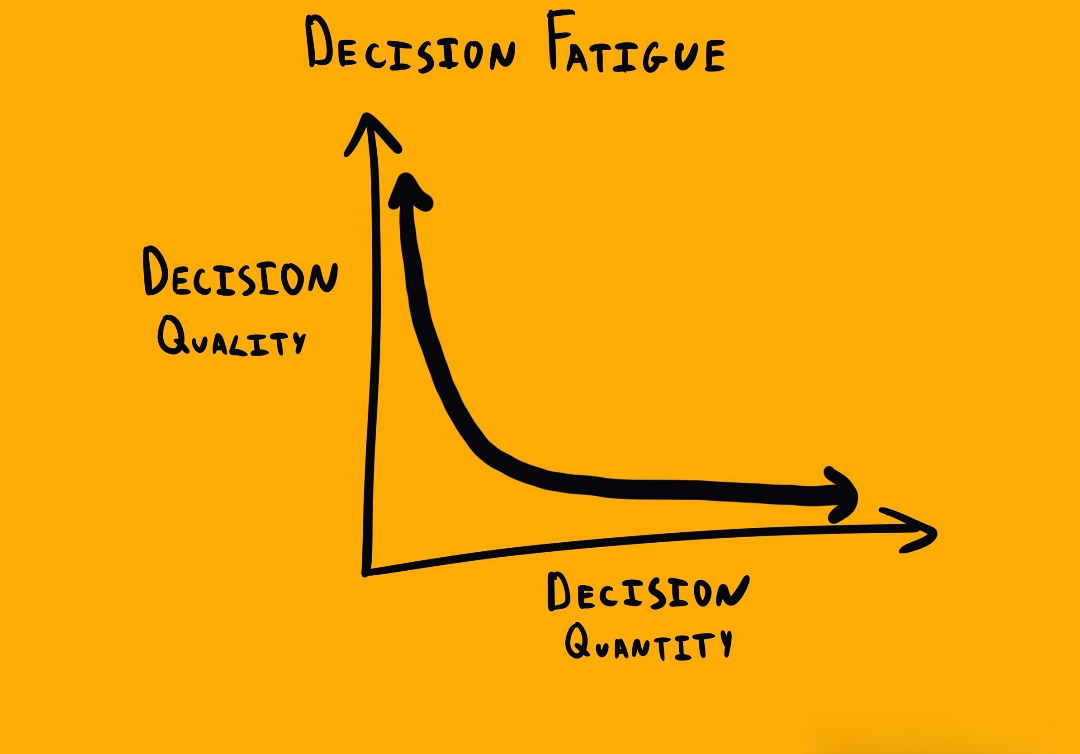
Decision fatigue happens when customers face too many choices at once.
Instead of buying, they:
hesitate
overthink
compare endlessly
leave the store completely
This behavior has become even more common in modern ecommerce because consumers now see thousands of products every single day.
Attention spans are shorter.
Patience is lower.
And shoppers expect fast decisions.
If your store feels mentally exhausting, customers leave before purchasing.
Why Many POD Stores Accidentally Create This Problem
A common beginner strategy in POD looks like this:
Upload 500 designs
Use 20 product categories
Add every trending niche
Offer endless color options
Test everything at once
The result?
A store that feels chaotic.
Instead of increasing sales, too many options often reduce conversions.
Because customers no longer know:
what the store is about
which product is the best
what they should buy first
More Products ≠ More Revenue
This is one of the biggest misconceptions in POD.
Many successful POD stores are surprisingly simple.
Sometimes they scale heavily with:
one niche
one audience
one winning concept
a small product catalog
Why?
Because focused stores create faster buying decisions.
And faster decisions create higher conversions.
The Psychology Behind High-Converting POD Stores
The best-performing stores usually guide customers clearly.
Instead of saying:
“Here are 1,000 random products.”
They communicate:
“This is exactly for you.”
That emotional clarity matters.
Customers buy faster when products feel:
specific
targeted
intentional
easy to understand
Why Niche Clarity Beats Product Quantity
Imagine two stores.
Store A
Sells:
pet shirts
anime mugs
camping blankets
political stickers
teacher tumblers
random meme hoodies
Store B
Focuses only on:
personalized gifts for dog moms
Which store feels more trustworthy?
Which one feels easier to buy from?
The second store immediately creates:
identity
emotional relevance
buyer confidence
This is why niche clarity is one of the strongest conversion tools in POD.
The “Winner Product” Strategy

Top sellers often scale using a different approach:
Instead of uploading hundreds of random products, they:
Find one strong concept
Build variations around it
Scale horizontally
Increase AOV strategically
For example:
A winning design can expand into:
t-shirts
hoodies
mugs
ornaments
acrylic decor
blankets
seasonal versions
This creates growth without overwhelming customers.
Why Simple Stores Usually Convert Better
High-converting POD stores often share similar characteristics:
Clear Branding
Customers instantly understand:
who the store is for
what style it sells
why products matter
Limited Choices
Too many variants slow decisions.
Smart sellers reduce friction by simplifying:
product selections
colors
collections
categories
Strong Product Focus
Instead of promoting everything equally, they push:
bestsellers
hero products
trending collections
This guides customers naturally toward purchase.
Modern POD Is Becoming More Like Content
Today’s successful stores behave less like giant catalogs and more like curated experiences.
Customers no longer want to browse endlessly.
They want:
quick emotional connection
strong identity
clear recommendations
fast buying decisions
This is especially important on platforms like TikTok, Instagram, and mobile ecommerce, where attention disappears within seconds.
Operational Simplicity Matters Too
Decision fatigue doesn’t only affect customers.
It also affects sellers.
Too many products often create:
inventory confusion
inconsistent branding
weak marketing focus
fulfillment complexity
slower optimization
That’s why many scaling sellers simplify operations intentionally.
How MerchFox Helps Sellers Scale More Efficiently
Scaling a POD business becomes easier when sellers can focus on:
fewer but stronger products
faster launches
cleaner operations
trend-based execution
MerchFox supports this approach with:
scalable fulfillment systems
trend-ready product catalogs
personalized product options
stable production workflows
US fulfillment support
24/7 operational assistance
This allows sellers to spend less time managing chaos and more time building profitable systems.
The Future of POD Is Simpler Than People Think
The next generation of successful POD brands will likely not be the stores with the biggest catalogs.
They will be the stores with:
the clearest positioning
the strongest emotional targeting
the simplest customer journey
the fastest execution systems
Because in modern ecommerce:
The easiest store to buy from often wins.